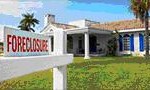
Foreclosure Rates Down, Analysts Surprised

CNBC’s The Street reported here that foreclosure rates in the United States dropped 30% for the first quarter of 2012 as compared to the same time last year; this despite the fact that there was an overall 8.1% increase this past March. While this is good news for the average homeowner, it has the analysts completely flummoxed.

According to the CNBC report “analysts had expected this number to skyrocket immediately following the $25 billion settlement between banks and state governments over fraudulent mortgage servicing.”

As the thinking goes, as soon as the banks got the settlement out of the way they were expected to continue to aggressively go after distressed homeowners like hungry lions who hadn’t eaten in a week. Now analysts don’t know what to make of the news of an overall 30% drop.

Even more surprising was the fact that the drop in foreclosure rates was steepest in states known as “non-judicial” states. In these states a judge is not required to oversee the foreclosure process, giving great latitude to the various parties involved. CNBC further points out that most of the decline is tied to private and portfolio loans, backing up the long-held assertion by banks that the majority of their alleged fraud problems stem from loans re-packaged and re-sold so many times no one knows who owns them.

At the same time foreclosure rates have been declining short sales have been on the increase. Statistics show a 15% increase for the final quarter of 2011 while REO sales (traditional sales of bank-owned homes) declined by 12%. Both of these statistics suggest that banks are trying to avoid completing foreclosure, preferring to approve a short sale rather than having to become owners of more distressed properties.

“”Lenders are increasingly recognizing that short sales may be a better alternative for them than foreclosure,” RealtyTrac’s Daren Blomquist told CNBC. “This trend began in markets with stronger demand and where the distressed inventory tends to be newer homes (Phoenix, Los Angeles, Las Vegas), but the trend appears to be spreading to other markets like Atlanta and Detroit.”

Foreclosure Rates Down, Analysts SurprisedAll Just Speculation

If nothing else, the CNBC story serves as a great reminder of the fact that analysts usually engage in routine speculation and nothing more. There is a place for such speculation, don’t misunderstand, but it must be taken for what it is. Analysts often get things wrong because they tend to fail to look at the big picture.

As an example, the same thing occurs with unemployment numbers. Month after month, when the U.S. economy doesn’t see significant growth, analysts are surprised to hear the government’s jobs numbers. Yet if they looked at the entire economy as a whole, including taxes and regulation, they probably wouldn’t be surprised. Their predictions would probably be more accurate as well.

In the real estate market it’s easy to speculate about where foreclosures are going and when the crisis will eventually come to an end. But in reality, no one knows. All we know is that there are a lot of homes currently under water with owners trying to find any way out they can. If banks are willing to settle for short sales in order to avoid foreclosure, that’s a good thing.


Did you enjoy this post? Tweet it, share it on facebook and let me know your thoughts by leaving a comment below!

Rex Donaldson


Be the first to comment - What do you think?  Posted by Rex Donaldson - May 19, 2012 at 5:18 pm

Categories: Foreclosure News, Foreclosure Report, USA Foreclosure   Tags: , , , ,

Foreclosure Affecting More Than Just Homes

In light of the continually troubled housing market it’s understandable that the vast majority of attention being paid to foreclosures is squarely on distressed homeowners and their properties. But truth be known, foreclosures go far beyond just residential properties. All over the country commercial enterprises are finding themselves in serious financial trouble as well. Among some of the hardest hit are America’s churches. Such is the case with Faith Christian Church of Lakewood Ranch, Florida.

Just days before the Easter holiday, Faith Christian Church was foreclosed on. The church’s financial difficulties had already led the pastor and its leadership to conclude they needed to shut down and dissolve the corporation at the end of April. They were hoping to get one last service in on Easter Sunday as a means of encouraging the church’s 140 congregants not to lose hope as they searched out new places to worship. Unfortunately, they won’t get that chance.

As reported by the Bradenton Herald here on April 6 2012, Faith Christian Church was originally established in 1996, moving to their current location some 11 years ago. The newspaper says the church “owes $1 million on the property” with monthly mortgage payments at “more than $8,000 per month.”

“They had every right,” said Pastor Tim Smith. “We couldn’t pay our mortgage. It’s too bad we couldn’t end it in a way we thought was more fitting.”

Neither Smith nor the congregation has any ill will toward the bank over the foreclosure. They knew they were in serious financial trouble months ago, which is why they began preparing for the closure.

On the front door of the church was is a sign warning vendors of the pending shutdown, informing them all bills would be paid but no new purchases would be made after April 8. With the foreclosure proceeding now in process, the church’s bank account has been reduced to zero; a situation which could cause problems for some vendors.

The Right Attitude

Foreclosure Affecting More Than Just Homes

By respres (http://www.flickr.com/photos/respres/2539334956/) CC-BY-2.0 (http://creativecommons.org/licenses/by/2.0), via Wikimedia Commons

It is certainly sad to see a religious institution as active in the community as Faith Christian Church having to shut down because of foreclosure. However, the attitude displayed by church members and their leadership is one we should all take notice of. Nowhere in the Bradenton Herald story was there any indication of bad blood between the two parties. Nor were there any complaints or attempts at finger-pointing from the church elders or pastor.

With humility this group acknowledged their failure to make good on their mortgage and the bank’s right to repossess their property. They will pick up the pieces of their lives and find new places to worship together. In the meantime, the bank will do what it always does; perform any work that needs to be done before putting the property back on the market. Hopefully both parties will agree to go their ways amicably and this will be the end of the story.

Both the bank and the church are to be commended for understanding what was at stake here. The church especially should be looked to for its example. If more foreclosed property owners were willing to accept the responsibility for their part of the foreclosure process we could all work together to get this mess cleaned up much more quickly.


Did you enjoy this post? Tweet it, share it on facebook and let me know your thoughts by leaving a comment below!

Rex Donaldson


Be the first to comment - What do you think?  Posted by Rex Donaldson - May 16, 2012 at 6:16 am

Categories: Foreclosure News   Tags: , , , , , ,

Foreclosed Home Neglect: Racial Bias or Just Business?

Phoenix area radio station KTAR picked up a story out of Washington alleging racial bias in the upkeep and sale of foreclosed homes around the country. According to the story, a public advocacy group fighting against fair housing discrimination claims banks are not putting the same effort into maintaining and selling foreclosed homes in minority neighborhoods as they are in white neighborhoods.

The National Fair Housing Alliance (NFHA) looked at foreclosed homes in nine different markets with a heavy focus on the Phoenix area because of the large number of distressed properties there. According to the organization their observations revealed “troubling disparities in maintenance and marketing practices” among houses located in predominantly black and Hispanic neighborhoods. The group alleges houses are not being maintained and are frequently found with broken windows, unkempt yards, and no “for sale” signs. As you’d expect, banks disagree with the assessment.

“Banks operate and are examined under fair-lending and fair-housing laws to ensure equal treatment across all communities,” said Bob Davis of the American Bankers Association. “Banks take care of these houses to preserve their collateral regardless of where the property is located.”

NFHA CEO Shanna Smith countered bank claims with a warning, stating “if people want to get into lengthy litigation, we’ll certainly have the resources to do that.” She said her organization plans to file racial discrimination complaints with HUD against a number of lenders they have deemed guilty.

Confusing Cause and Effect

Foreclosed Home Neglect: Racial Bias or Just Business?The unfortunate result of the “investigation” by the NFHA is the automatic association made between property condition and racial bias. Just because houses in black and Hispanic neighborhoods are in poor condition does not justify the allegations made against banks. In fact, when you consider that banking is a business in which owners and shareholders are trying to make money, it simply makes no logical sense for banks to purposely reduce the value of the homes they’re trying to sell based on the skin color of neighborhood residents.

In reality what NFHA is observing is the normal course of the real estate market based on current economic conditions. Banks must use their financial resources in order to get the highest return on all of their properties. So they can sink tons of money into homes located in depressed neighborhoods only to find they will never get that money back when it comes time to sell. By the same token, foreclosed homes in more economically viable neighborhoods will bring a better return on the dollar.

Furthermore, NFHA never explains what condition these neglected homes were in when they were foreclosed on. Could it be that they were in worse shape because their previous owners also neglected them?

One of the most well known truths of the real estate market is that property values are heavily affected by other similar properties in a given community. A more fair assessment for the NFHA would have been to compare the foreclosed homes to all the other homes in the neighborhood before making accusations. If they found that these neighborhoods were all well maintained and had property values at or above the median they would have legitimate cause for concern. But if all they are doing is looking at houses from the curb before charging racial bias, they are way out of line.


Did you enjoy this post? Tweet it, share it on facebook and let me know your thoughts by leaving a comment below!

Rex Donaldson


Be the first to comment - What do you think?  Posted by Rex Donaldson - May 13, 2012 at 7:37 pm

Categories: Foreclosure Problems, USA Foreclosure   Tags: , , , , , , ,

“Ability to Repay” Rule Could Prompt More Foreclosures

On April 26, 2012 the Kansas City Star published a column from the Philadelphia Inquirer’s Al Heavens analyzing the federal government’s new “ability to repay” rule. This rule was part of the Frank-Dodd financial reform act of 2010 aimed at getting rid of high-risk mortgages and cleaning up the home lending industry. Among other things the Frank-Dodd legislation essentially put an end to risky mortgage products like interest only and negative amortization loans.

While parts of 2010 legislation have proved beneficial to borrowers, the ability to repay rule is being criticized by many in the industry as being too restrictive and having the potential to cause a second round of massive foreclosures in the near future. According to Heavens, “Dodd-Frank mandated…a rule requiring institutions that place securities in the asset-backed secondary market to have a financial stake in ensuring that mortgage products are quality products.”

In plain English what this rule states is that if a mortgage lender is going to package a group of mortgages together and sell them as secondary securities to other investors, that bank must retain some sort of financial interest in the package. The thinking here is that if banks still have a financial interest they will go the extra mile to make sure all the mortgages they sell are quality mortgages.

“In typical government fashion, they will create a solution to a problem that doesn’t exist,” PA mortgage lender Jerome Scarpello told Heavens. “The subprime loans and no-income-verification loans are gone. The underwriting criteria currently in place (are) hard enough without smothering the little improvement I see in the market.”

If Scarpello and other critics of the rule are correct, banks will become even more cautious about mortgage lending to anyone with less than stellar credit. Those right on the edge will be pushed into riskier loans with less reputable mortgage lenders as a result. If the housing market sees too many loans made under those circumstances it could very well cause a secondary collapse 5 to 10 years down the road.

Washington the Shortsightedness

"Ability to Repay" Rule Could Prompt More Foreclosures

Washington is being shortsighted in its efforts to help stem the foreclosure mess

The question for mortgage lenders here is whether or not Washington is being shortsighted in its efforts to help stem the foreclosure mess. On the one hand it would seem that more restrictions on mortgage lending are appropriate given the circumstances. But strict lending practices were already in place before Congress intervened back in the 1990s.

Just as an example, it used to be that mortgage lenders could not repackage mortgages and sell them to investors. That in itself was a good form of self-regulation that prevented risky lending practices. Now this new rule might be going too far in the other direction by completely cutting off any willingness among banks to offer standard mortgages.

Mr. Scarpello is correct in his assertion that banks no longer offer subprime and no-verification loans. Just the elimination of those two options keeps most risky borrowers out of the marketplace by default. If this new rule funnels those with average credit toward more costly mortgages it will have the opposite effect than was intended. At the very least, it may prevent future home buyers from purchasing. At worst it could wind up causing more foreclosures by forcing people to take mortgages they can’t afford.


Did you enjoy this post? Tweet it, share it on facebook and let me know your thoughts by leaving a comment below!

Rex Donaldson


Be the first to comment - What do you think?  Posted by Rex Donaldson - May 10, 2012 at 10:33 am

Categories: Foreclosure Law, Foreclosure Problems   Tags: , , , , , , ,

Congress Considering Tax Issue With Foreclosure Settlement

If you’ve been following the news regarding the foreclosure crisis you’re probably familiar with the settlement between five of the nation’s largest mortgage lenders and 49 state attorneys general. The $25 billion settlement was reached as a means of preventing further litigation against the banks for alleged “illegal” foreclosures. Interestingly enough, the thousands of homeowners expected to receive cash from the settlement will also be subject to income tax on that money. That is, unless Congress manages to get a bill through to the president’s desk within the next couple of months.

According to a news story from Accounting Today Rep. Jim McDermott and two co-sponsors have introduced a bill into the house that would exclude settlement payments from federal income tax. His reasoning is that settlement recipients have been wrongly foreclosed upon and the settlement money is “payback” for wrongs done.

I applaud the work of the state attorneys general in brokering this settlement to provide needed relief to America’s homeowners and service members,” said a statement from McDermott. “This level of consensus is rare, and speaks volumes to how important this relief is. Now it’s our turn to ensure that every bit of negotiated relief goes to the people who need it the most. Collecting federal income tax on relief intended for struggling homeowners is not only bad policy, but is simply wrong.

The bill seems like a slam dunk for McDermott and his three co-sponsors. It’s hard to believe in election year any representative or senator would have the nerve to vote down legislation that provides any measure of tax relief. Yet at the same time, in the circus atmosphere that now pervades Washington nothing is impossible.

The Question of Tax Fairness

The Question of Tax Fairness on ForeclosureWhether or not you agree with McDermott’s assessment the potential tax relief bill opens up a further can of worms no one seems to be talking about. That can worms has to do with tax fairness.

In other words, most of the money set aside for distressed homeowner relief by the Obama administration in recent years has never made it into the hands of homeowners. Likewise, this tax relief bill will only affect a small minority of homeowners facing foreclosure. What about those homeowners not receiving any settlement funds? Not only will they not be receiving any direct help, they also won’t be receiving any tax breaks either.

Tax fairness is the principle that all citizens should be treated the same way when it comes to how tax laws are applied. To that end this bill is patently unfair to a vast majority of homeowners who are in financial trouble but not reaping the benefits of the bank settlement. Furthermore, I dare say there won’t be many of the nation’s wealthy homeowners positively affected by either the settlement or the tax relief bill. Therefore, tax fairness is once again left by the wayside for political purposes.

Nothing ever seems to change in Washington, does it?


Did you enjoy this post? Tweet it, share it on facebook and let me know your thoughts by leaving a comment below!

Rex Donaldson


Be the first to comment - What do you think?  Posted by Rex Donaldson - May 7, 2012 at 2:19 pm

Categories: Foreclosure Law, Foreclosure Report   Tags: , , , , , , ,

Next Page »